Lake Havasu City Fracture Care

Fracture Care in Lake Havasu City

Evaluation and treatment for broken bones of the hip, wrist, ankle, kneecap and collarbone, from casting and splinting to surgical fixation when it is the better option, with a clear plan for healing and getting back to activity.

Go to the emergency room or call 911 if:

  • Bone is coming through the skin
  • The arm or leg is cold, pale, numb or badly deformed
  • Bleeding will not stop
  • You cannot stand after a hip injury
  • There is any head, neck or back injury

For other suspected fractures, or follow-up after an ER or urgent care visit, call the clinic at (928) 538-4325.

Fractures Dr. Barnes treats.

Treatment depends on which bone is broken, whether it is in good position, whether it is stable, and what you need to get back to. These are the most common fractures seen in the clinic.

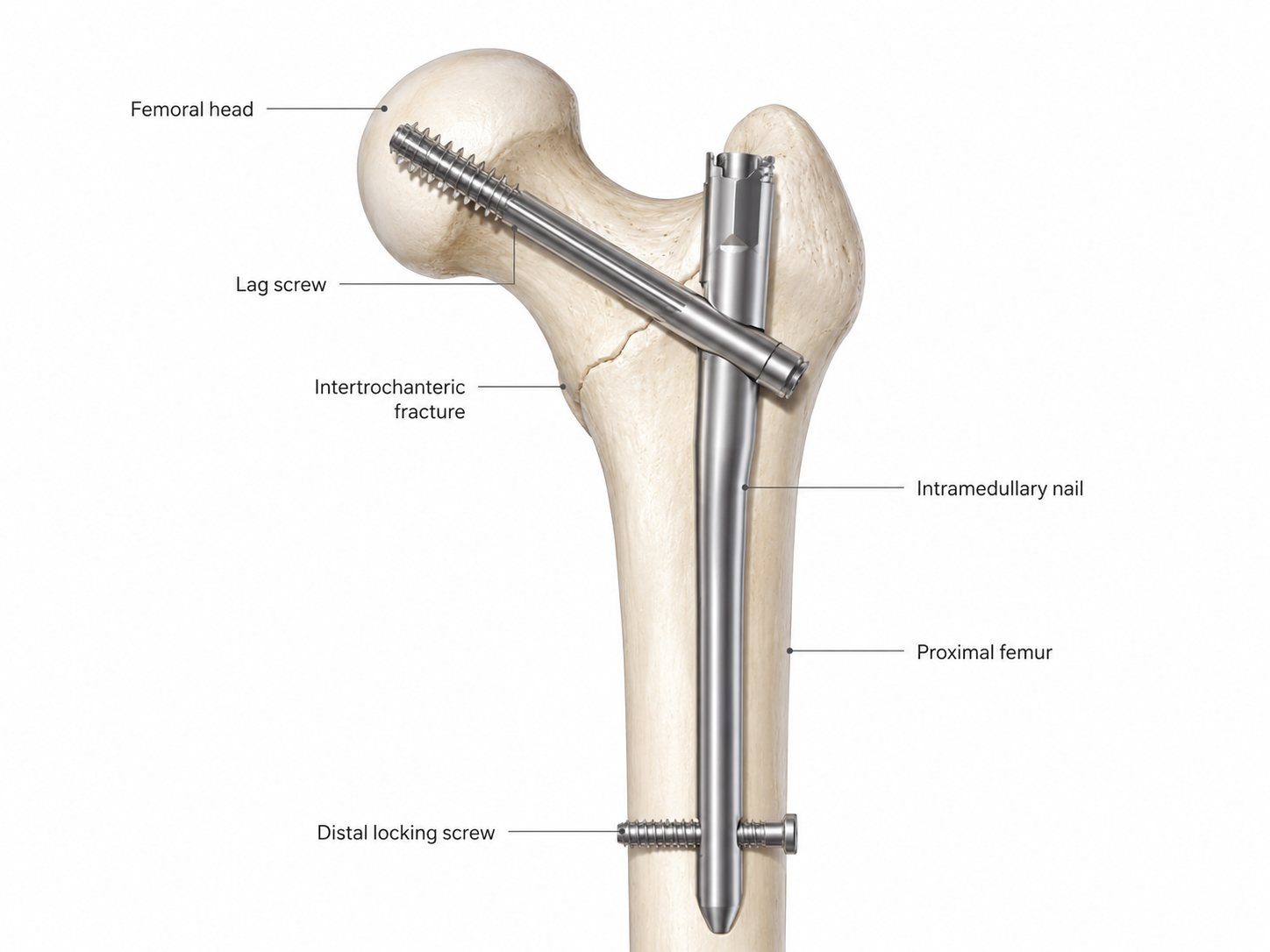
Cephalomedullary nail used to stabilize an intertrochanteric hip fracture

Hip fractures

Usually caused by a fall, especially when bones have thinned. Most hip fractures are treated with surgery so patients can get up and moving as soon as safely possible.

  • Femoral neck fractures: fixation, hemiarthroplasty or total hip replacement depending on the pattern and the patient
  • Intertrochanteric fractures: commonly stabilized with a cephalomedullary nail (a rod-and-screw construct)
More about hip care →
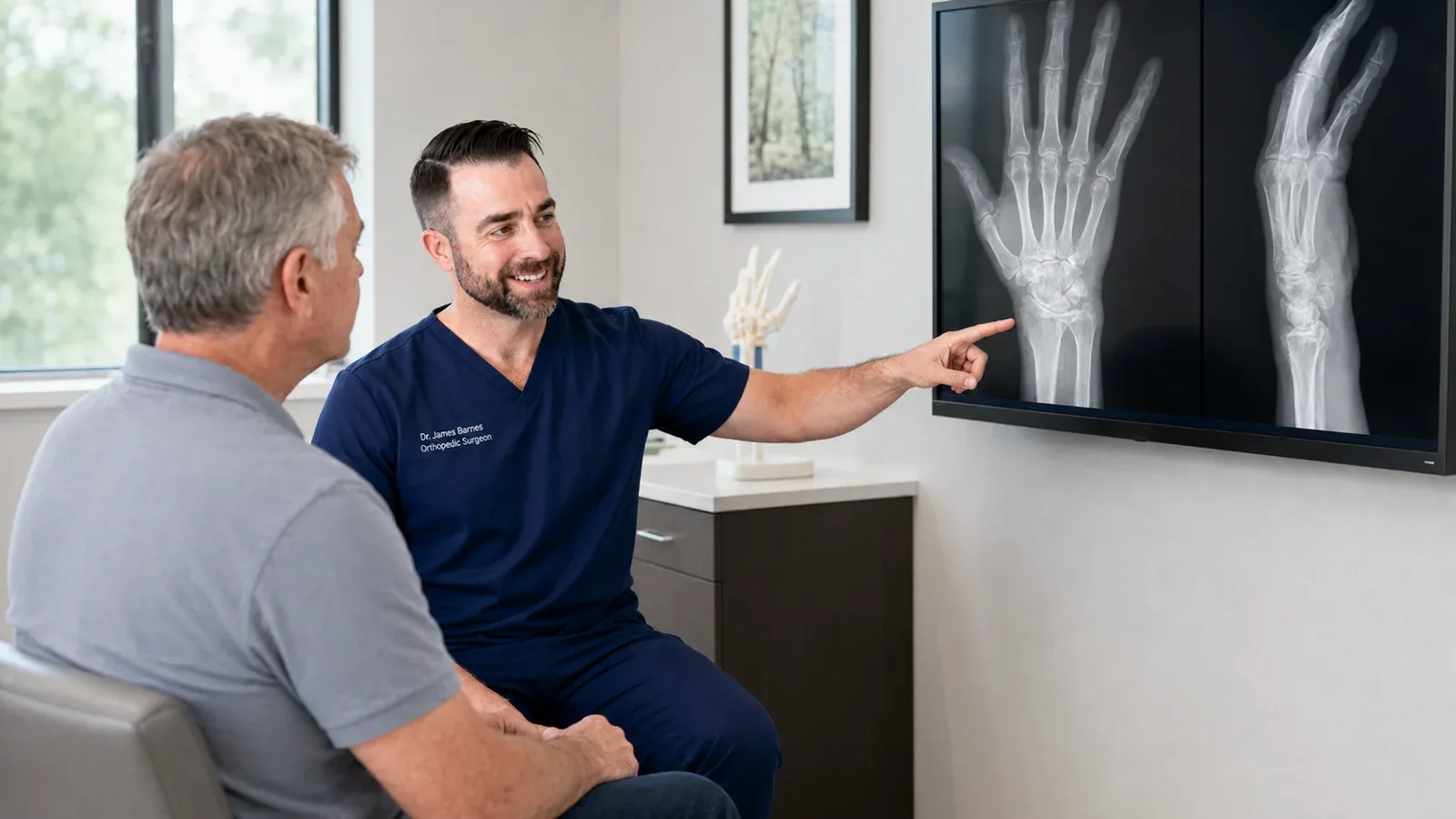
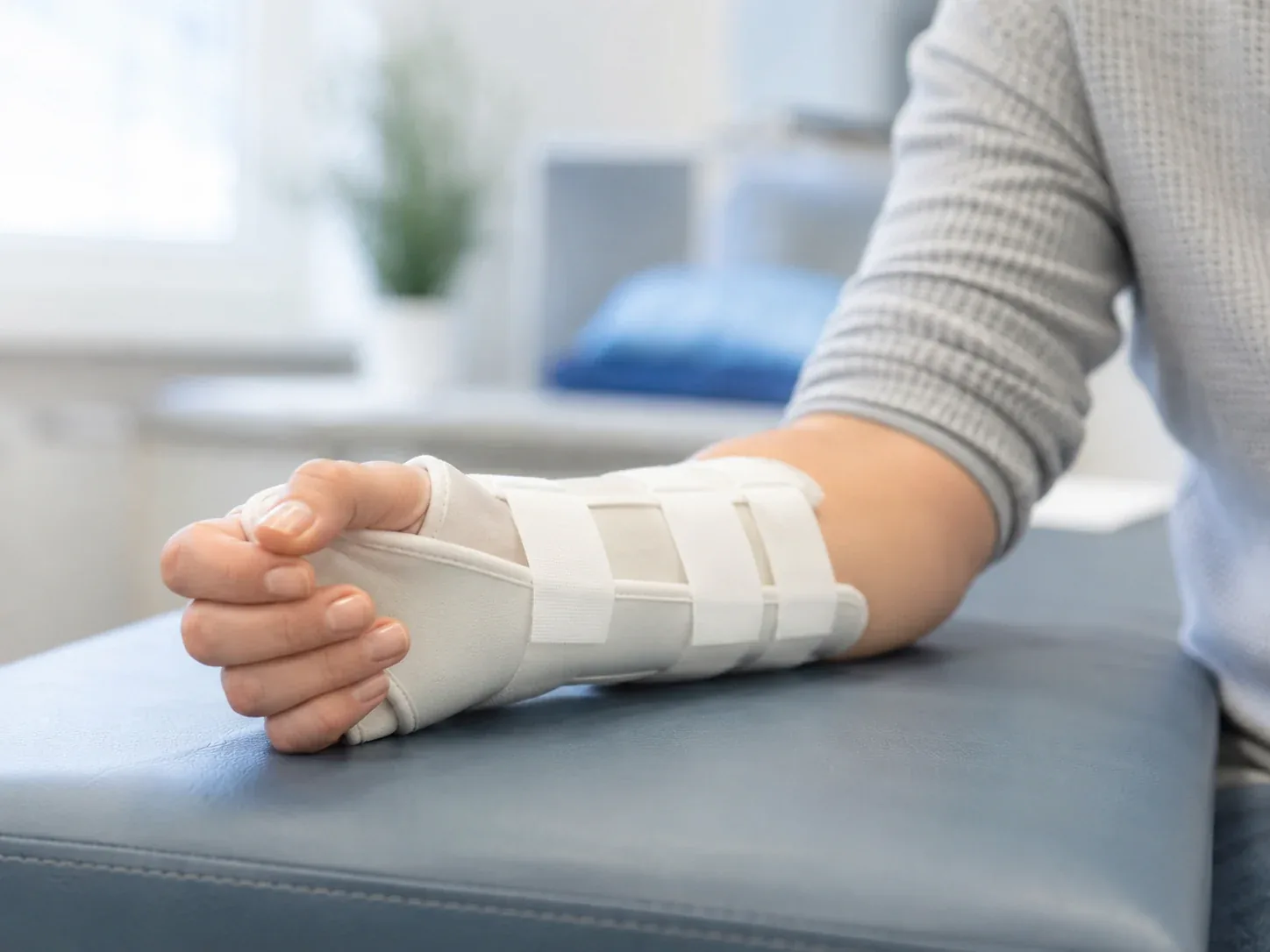
Patient wearing a wrist splint after a distal radius fracture

Wrist fractures

Distal radius and ulna fractures are among the most common broken bones, often from a fall onto an outstretched hand.

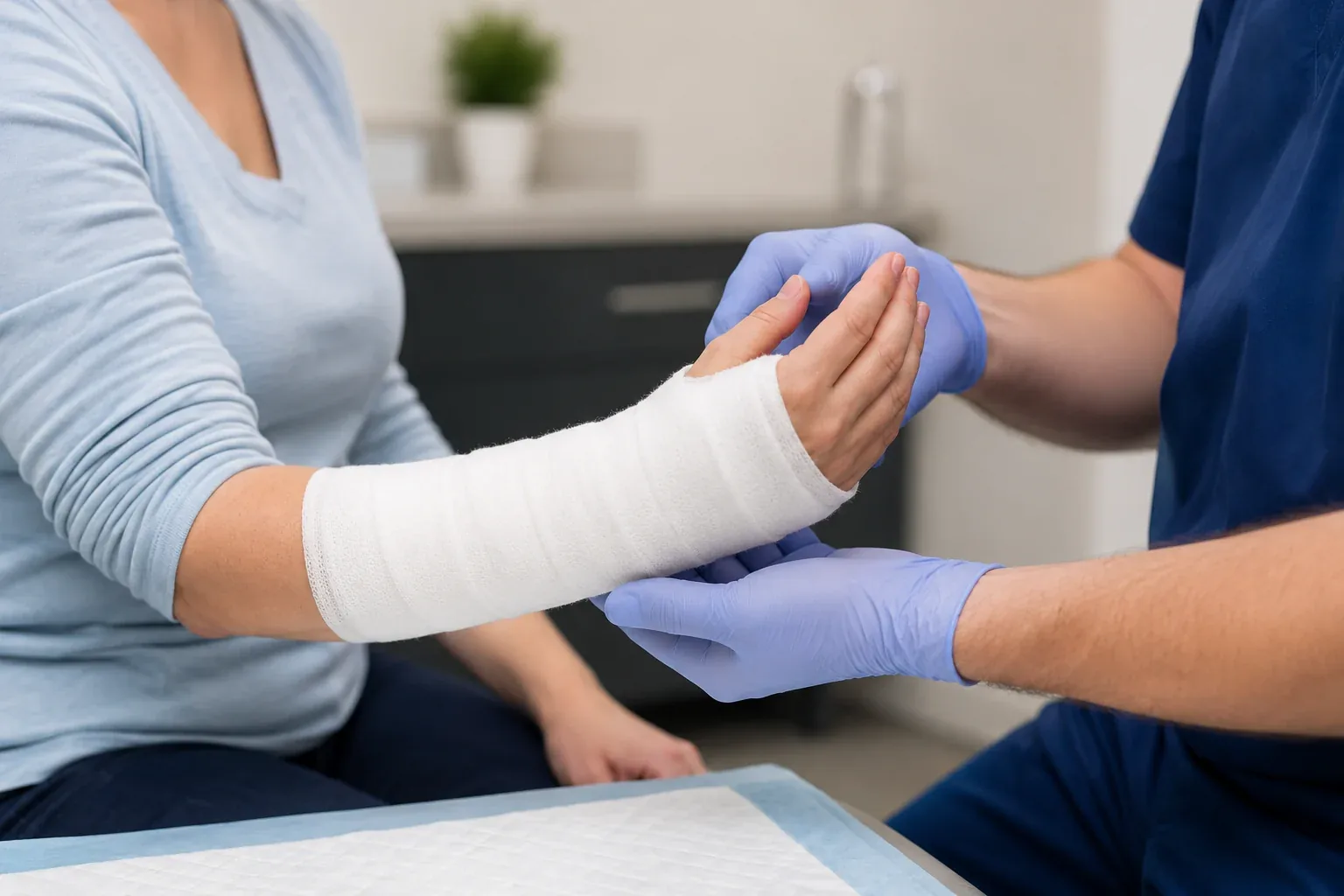
  • Stable fractures: splinting or casting with repeat X-rays
  • Surgery when alignment, stability or joint involvement makes it the better option
More about hand & wrist care →
Reviewing an ankle fracture X-ray with a patient

Ankle fractures

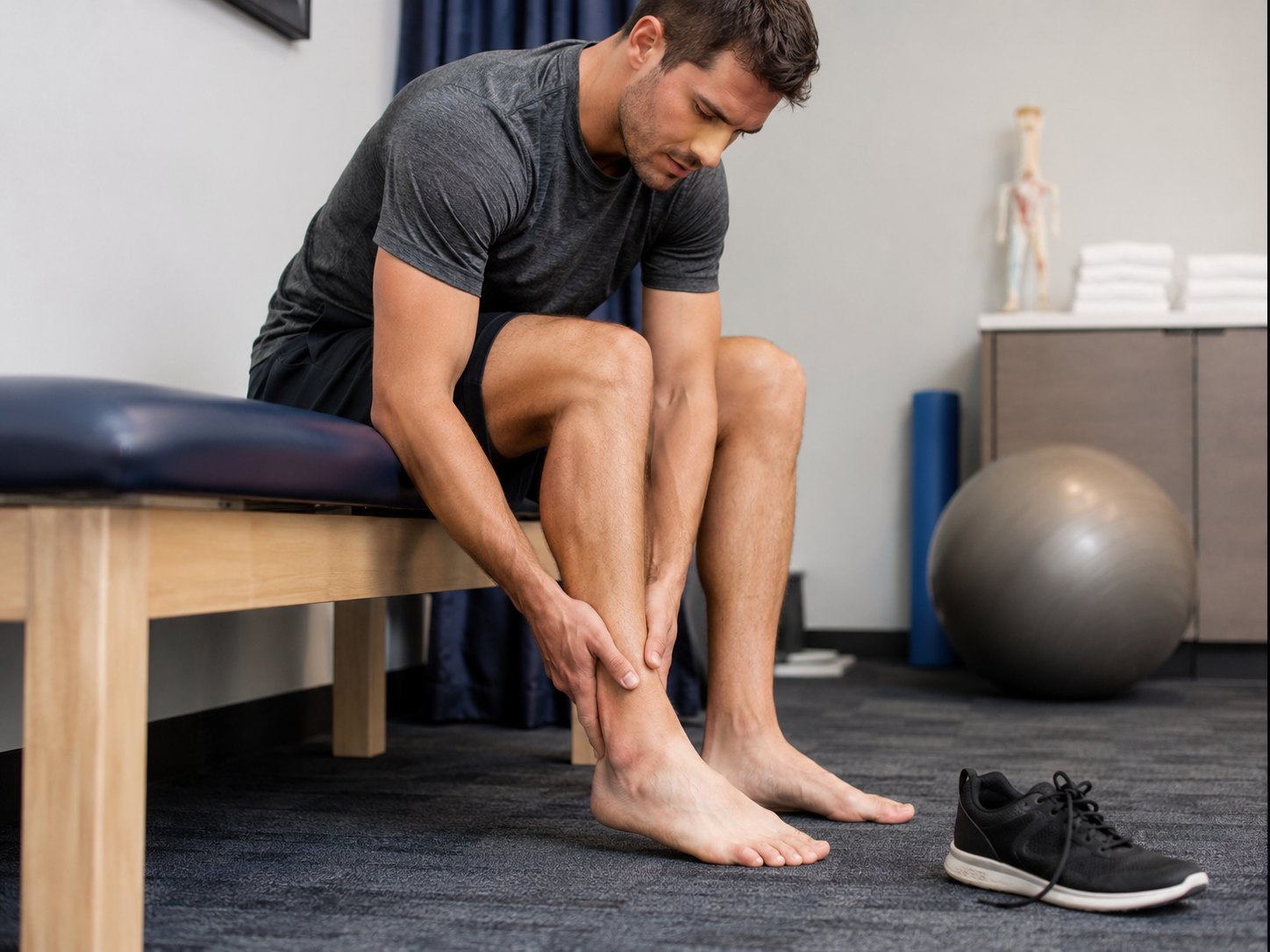
A twisting injury that seems like a sprain can be a fracture. Inability to bear weight, bone tenderness or significant swelling deserve an X-ray.

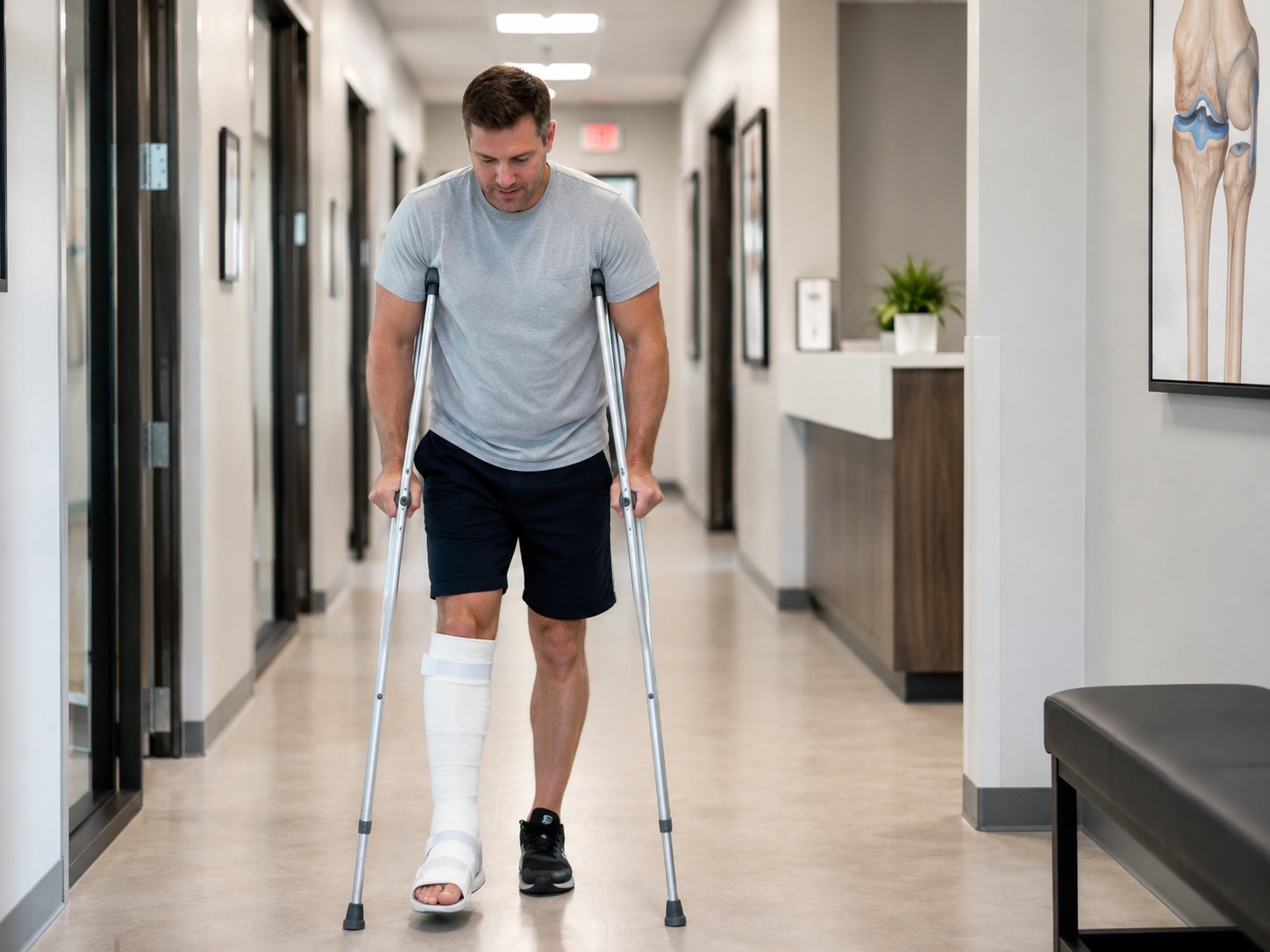
  • Stable fractures: boot or cast with a weight-bearing plan
  • Unstable or displaced fractures: plates and screws to restore alignment
More about foot & ankle care →
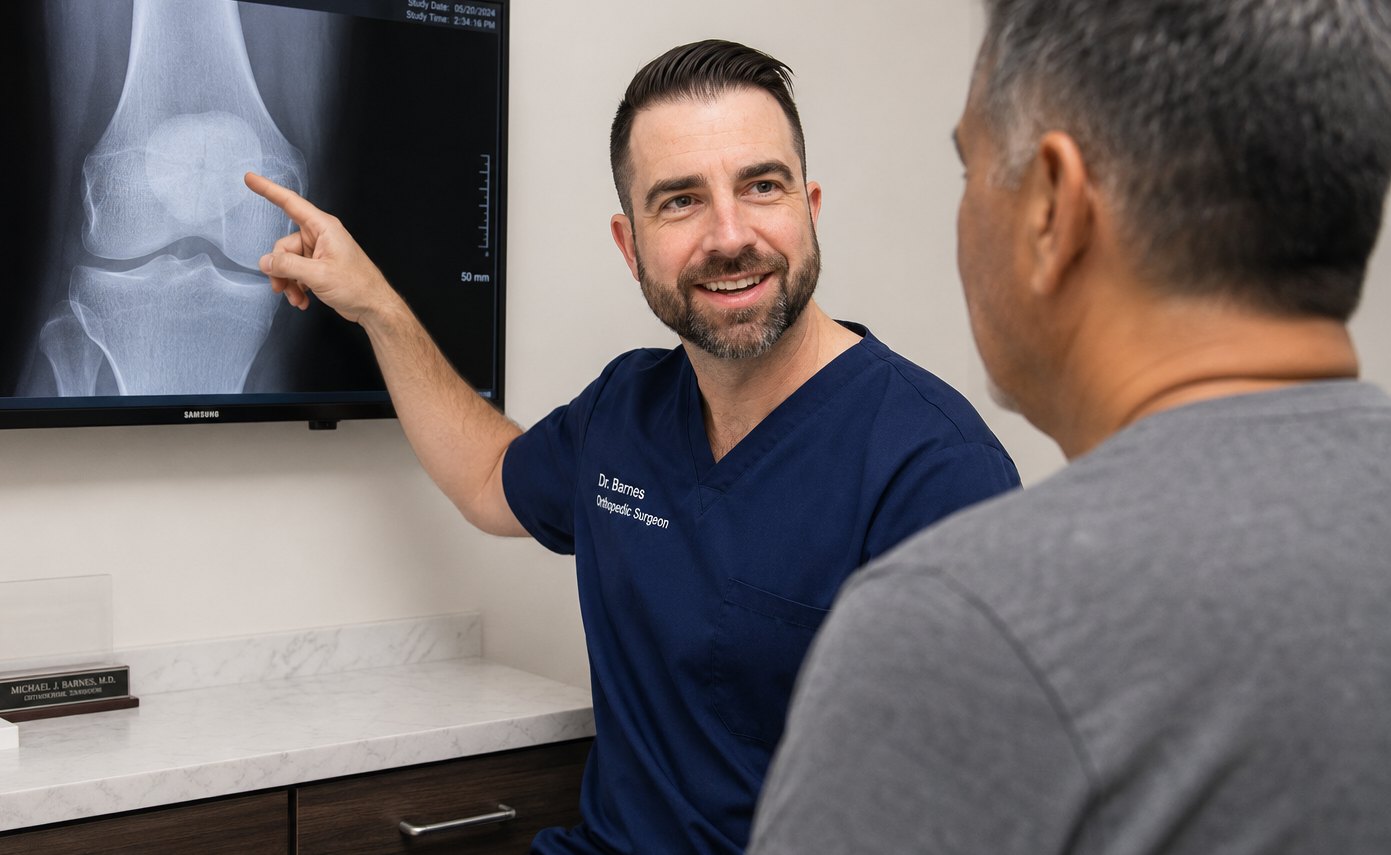
Reviewing a knee fracture X-ray with a patient

Kneecap (patella) fractures

Usually from a direct fall onto the knee. The key question is whether you can still actively straighten the leg.

  • Non-displaced fractures with the straightening mechanism intact: bracing in extension
  • Displaced fractures or loss of straightening: surgical fixation
More about knee care →
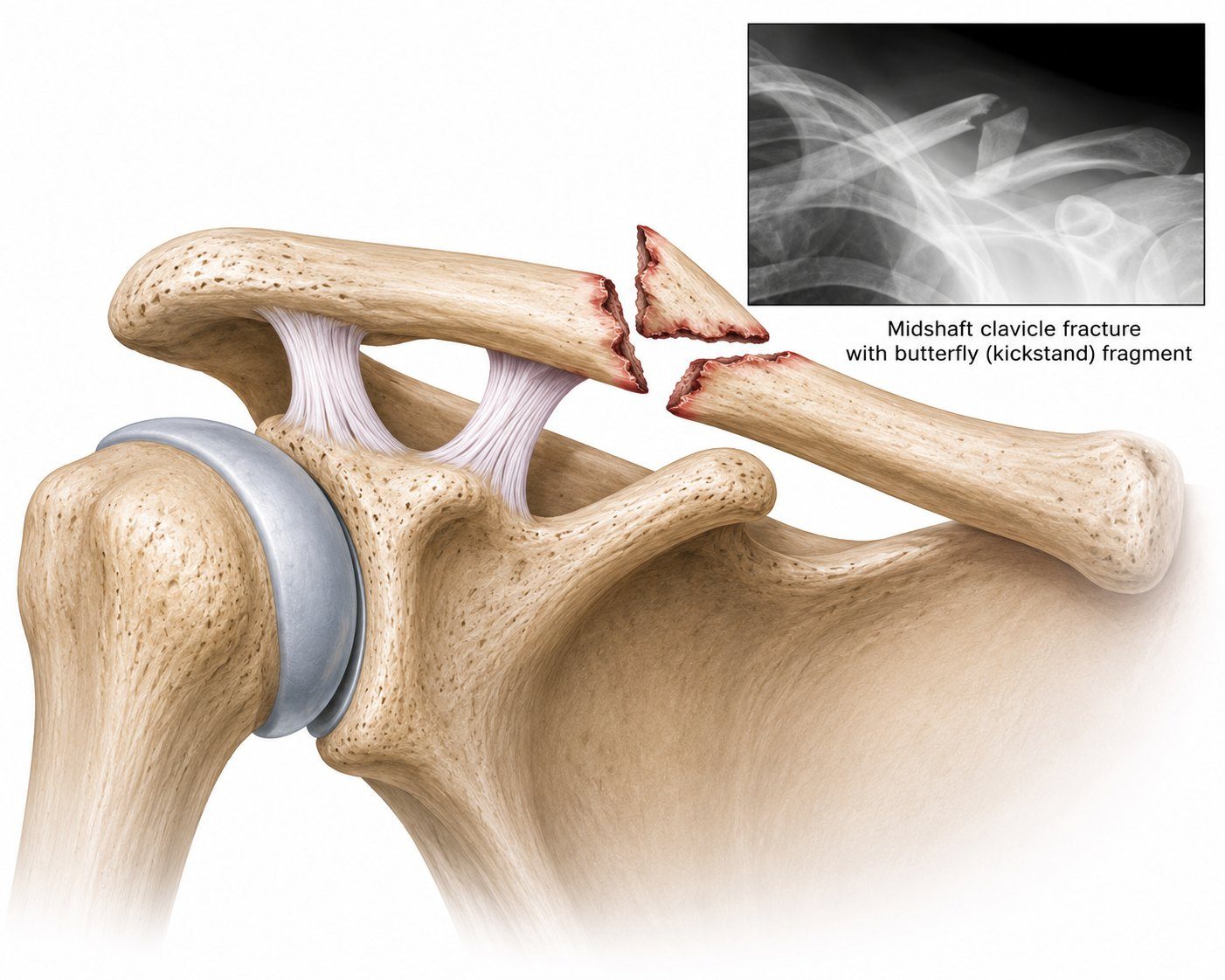
X-ray of a clavicle fracture

Collarbone (clavicle) fractures

Common after cycling, off-road, sports and fall injuries. Many heal in a sling; some benefit from fixation.

  • Sling, motion and follow-up X-rays for many fractures
  • Plate fixation (ORIF) when displacement, shortening or patient goals make it the better option
More about shoulder care →

Other fractures

Dr. Barnes also evaluates other common fractures, including:

  • Shoulder (proximal humerus) fractures
  • Fractures around the knee, such as tibial plateau and distal femur
  • Foot fractures
  • Stress fractures in runners and athletes

If a fracture is outside his scope, he can help guide the next appropriate referral.

What to expect after a fracture.

The goal is a bone that heals in good position and a plan you understand from the first visit.

1

Exam & X-rays

A focused exam and X-rays, with CT or MRI when the fracture needs more detail.

2

Stable or unstable?

Position, stability and joint involvement decide whether the fracture can heal on its own with protection.

3

Protect or fix

A splint, cast, boot or sling for many fractures; surgery when it gives the bone a better chance to heal well.

4

Heal & recover

Follow-up X-rays, a weight-bearing or activity plan, and physical therapy when it helps.

Treatment options.

Surgery is not the answer for every fracture, but for some it is the best way to restore alignment and stability.

Splint, cast, boot or sling

  • Stable, well-aligned fractures
  • Repeat X-rays to confirm position
  • Gradual return of motion and weight-bearing

Plates & screws (ORIF)

  • Displaced or unstable fractures
  • Fractures involving a joint surface
  • Wrist, ankle, kneecap and collarbone

Rods (intramedullary nails)

  • Intertrochanteric hip fractures
  • Selected long-bone fractures
  • Designed to allow early movement

Partial or total hip replacement

  • Selected displaced femoral neck fractures
  • Hemiarthroplasty or total hip replacement
  • Chosen by fracture pattern, health and activity

Surgical risks

All surgery has risk, including pain, bleeding, infection, damage to surrounding tissues, stiffness, need for additional procedures, failure of the bone to heal, implant or fixation failure, blood clot, heart attack, stroke and death. These risks are low, but they are not zero.

A fracture can be a warning about bone health.

A broken bone from a fall from standing height, especially a wrist, hip or spine fracture after age 50, can be the first sign of osteoporosis. Treating the fracture is step one. Lowering the risk of the next one is step two.

Ask your primary care provider whether a bone density test makes sense for you. Learn more in Osteopenia vs. Osteoporosis.

Fracture care FAQ.

Common questions after a broken bone.

Is a fracture the same as a broken bone?

Yes. Fracture is simply the medical word for a broken bone. A "crack" or "hairline" fracture is still a fracture; what matters for treatment is which bone is involved, whether it is in good position, and whether it is stable.

When should I go to the emergency room instead of the clinic?

Call 911 or go to the nearest emergency room for bone through the skin, a limb that is cold, pale, numb or obviously deformed, uncontrolled bleeding, a hip injury where you cannot stand, or any head, neck or back injury. For other suspected fractures, call the clinic at (928) 538-4325.

Do all fractures need surgery?

No. Many fractures heal well with a splint, cast, boot or sling and repeat X-rays. Surgery is considered when a fracture is displaced, unstable, involves a joint surface, or is unlikely to heal in good position without fixation. Most hip fractures are an exception and are usually treated surgically.

How long does a fracture take to heal?

Six to eight weeks is a common general rule for bone healing, but it is not a guarantee. The bone involved, how the fracture is treated, smoking, diabetes, nutrition and bone density all affect healing, and getting full strength and motion back often takes longer.

Do plates and screws have to come out?

Usually not. Most orthopedic hardware is designed to stay in place permanently. Removal may be considered if hardware is painful, prominent, irritating a tendon, or associated with infection or other problems.

Can a fracture mean I have weak bones?

Sometimes. A fracture from a fall from standing height or less can be a sign of osteoporosis. After a fracture like that, it is worth talking with your primary care provider about a bone density test and treatment to lower the risk of the next fracture.

Think you broke a bone?

Get a clear diagnosis, the right protection or repair, and a plan for healing.

Schedule Appointment