Bone is living tissue. When it breaks, the body begins repairing it immediately — but healing is not a single event. It is a process that unfolds in overlapping stages over weeks and months.
The six-to-eight-week rule is a useful starting point, not a guarantee. Some fractures heal faster. Many take longer. Understanding what is actually happening inside the bone can help set realistic expectations.
For practical ways to support that process, see How Can I Make My Bone Heal Faster?.
How bone healing works
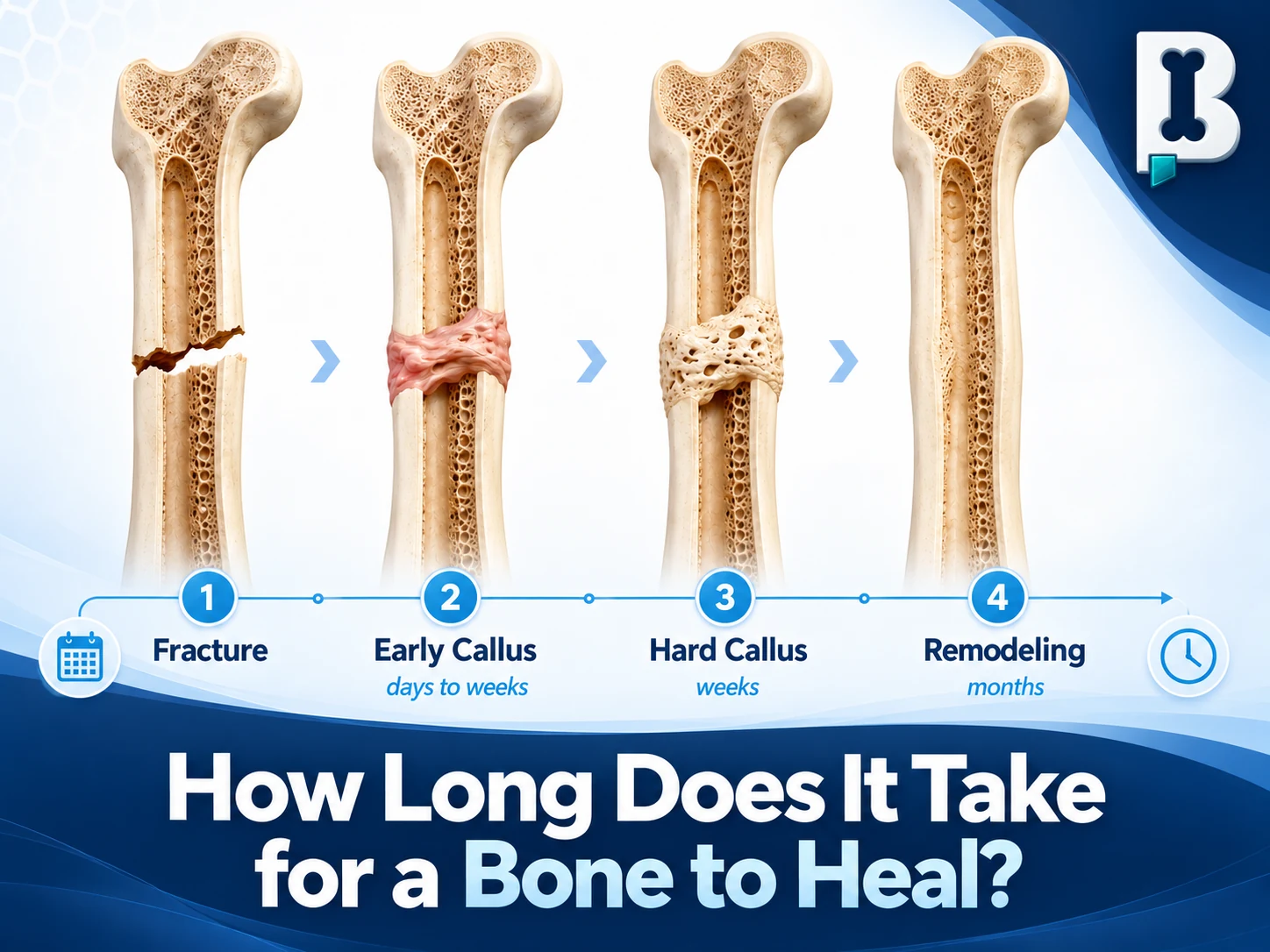
After a fracture, healing moves through four general stages that overlap and do not follow a fixed schedule.
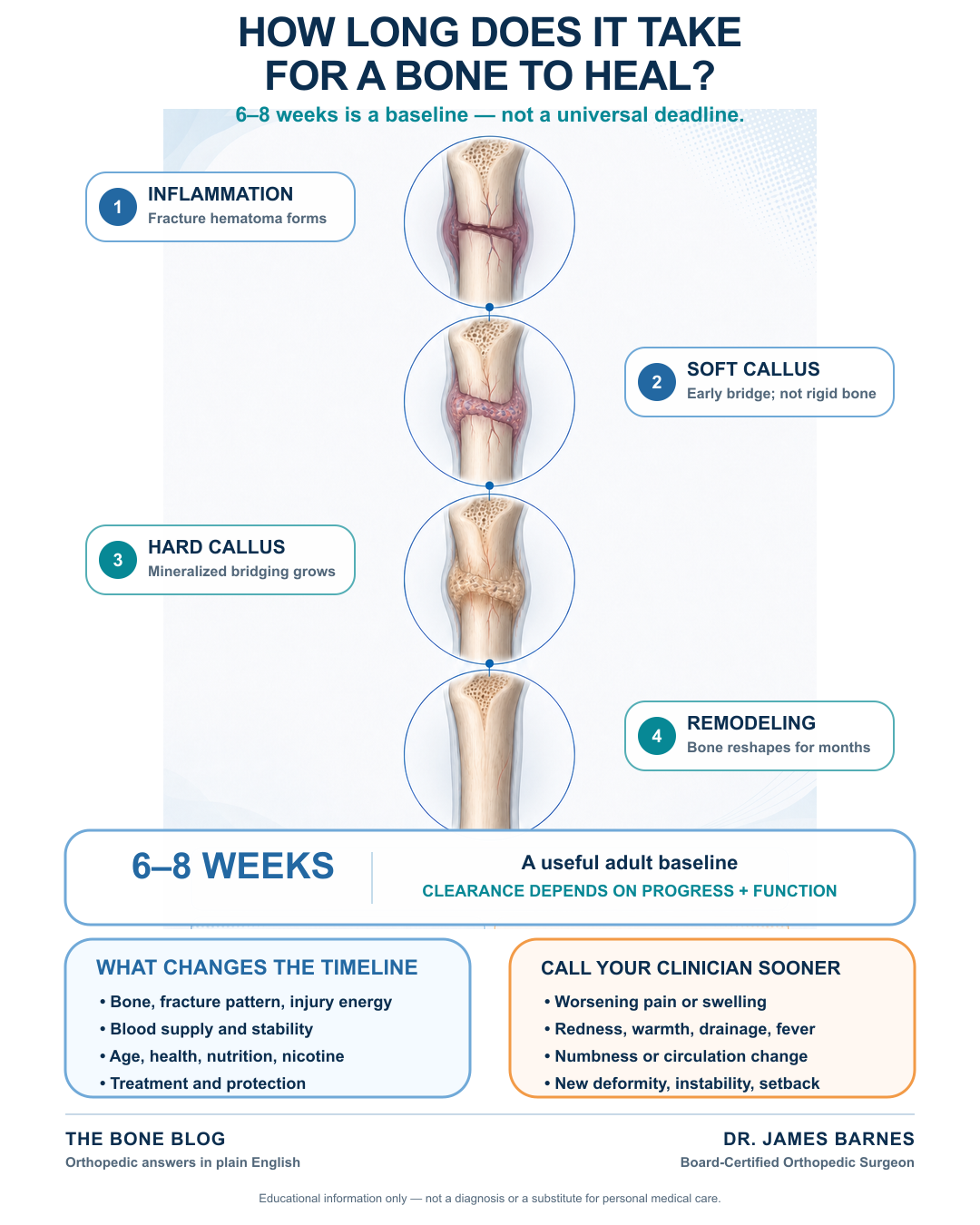
Stage 1 — Inflammatory phase. Within hours of the fracture, a blood clot forms at the break. Early repair cells — including osteoblasts, which build bone — migrate to the site. Swelling and warmth are normal at this stage and reflect active repair, not infection.
Stage 2 — Soft callus. Over the next few weeks, the clot is replaced by soft, cartilage-like tissue that bridges the fracture gap. This callus is not bone yet, but it begins to stabilize the fracture. The bone is still fragile at this stage, which is why immobilization or fixation is often maintained.
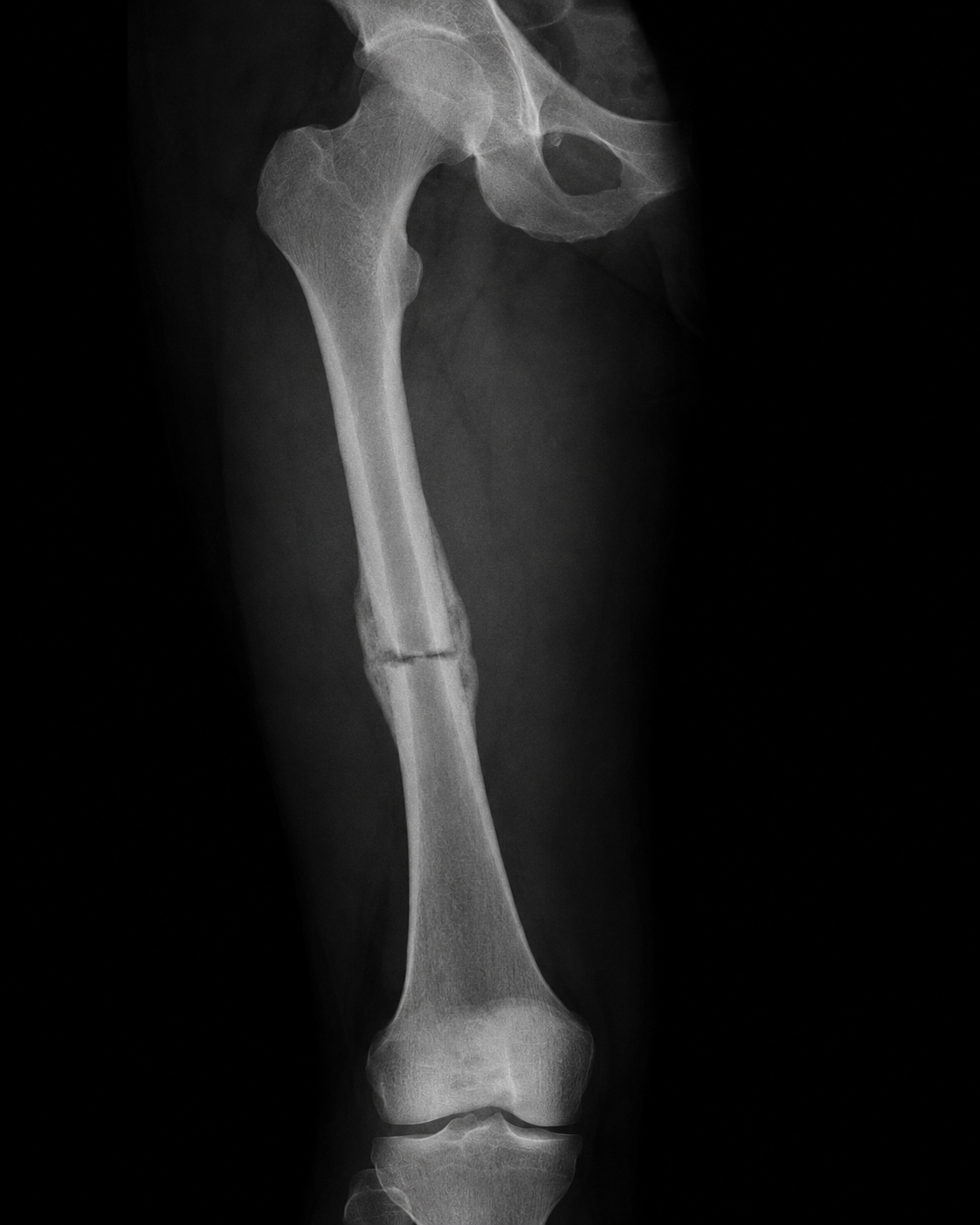
Stage 3 — Hard callus. The soft callus mineralizes — it becomes harder as calcium is deposited. This is often when fracture healing becomes visible on X-ray as a dense, slightly irregular area around the fracture site. The bone is more stable but not yet at full strength.
Stage 4 — Remodeling. Over months to years, the body reorganizes the callus into compact, load-bearing bone. The bone gradually reshaped along the lines of mechanical stress, ideally returning close to its original structure. Remodeling continues long after a fracture appears healed on X-ray.
Why the timeline varies so much
The six-to-eight-week estimate is most accurate for simpler fractures in otherwise healthy adults. Many factors push that timeline in either direction.
Bone involved. A finger phalanx and a femoral shaft are not the same. Small bones in relatively low-stress positions often heal faster than large bones that bear the body’s full weight or are subject to strong muscle forces.
Fracture pattern. A clean transverse fracture with good alignment has a different healing trajectory than a comminuted fracture (many fragments) or a fracture that displaced significantly. Fractures that extend into a joint — intra-articular fractures — require more precise healing to prevent early arthritis.
Blood supply. Bone needs an adequate blood supply to heal. The femoral head and the scaphoid (a small wrist bone) have notoriously vulnerable blood supplies, which is why certain fractures in those locations carry higher rates of delayed healing or avascular necrosis.
Stability and treatment. Fractures treated with surgical fixation are stabilized so healing can proceed in the right position. Fractures managed in a cast or brace depend on maintaining appropriate alignment. Either way, stability is essential for the bone to bridge the gap.
Patient health. Nicotine use — smoking in particular — is one of the most consistently documented factors in delayed bone healing. It affects blood vessel function and impairs the repair process at a cellular level. Diabetes, osteoporosis, poor nutrition (especially inadequate calcium and vitamin D), and certain medications also slow healing. Corticosteroids, some anti-inflammatory medications, and chemotherapy agents are among the drugs that can affect bone repair.
Age. Bone healing capacity changes with age, though this relationship is more complex than a simple “younger heals faster” rule. Children heal fractures remarkably quickly and can often remodel significant deformity. In older adults, healing is generally slower, and complications such as delayed union or nonunion are more common.
What does “healed” actually mean?
When a physician says a fracture is healed, it typically means the bone is stable and pain-free enough to progress to rehabilitation or activity. It does not mean the bone is identical to what it was before the fracture.
Radiographic healing — when the X-ray shows bridging callus — and clinical healing — when the patient can use the limb without significant pain — do not always coincide precisely. Full structural remodeling takes considerably longer. For larger bones like the femur or tibia, the remodeling process can continue for a year or more.
This matters for expectations. Feeling better does not always mean the bone is fully ready for high-demand activities. Return-to-sport decisions, for example, depend on more than a healed X-ray.
When to seek evaluation
Not every fracture is obvious. Some present with persistent aching rather than sharp pain. Others occur in the setting of bone that is already weakened by osteoporosis and may not produce the dramatic pain one might expect.
Seek evaluation when:
- Pain after an injury is significant, worsening, or not improving over several days.
- Weight-bearing is difficult or impossible.
- There is visible deformity, excessive swelling, or bruising that is spreading.
- Numbness or tingling accompanies the injury.
- There is an open wound near the injury site.
- A previous fracture seems not to be healing on the expected schedule.
Not all fractures require surgery. Many heal well with casting, bracing, or protected weight-bearing. Accurate diagnosis guides the safest path.
Bottom line
For most patients, a broken bone takes about six to eight weeks to reach the point where basic function resumes. Complete recovery — full remodeling, full strength — takes longer.
The specific timeline for any fracture depends on which bone is involved, how it was injured, how it is being treated, and the patient’s overall health. If a fracture is not healing as expected, or if new symptoms develop during recovery, an evaluation is appropriate.
References
- Marsell R, Einhorn TA. The biology of fracture healing. Injury. 2011;42(6):551–555.
- Claes L, Recknagel S, Ignatius A. Fracture healing under healthy and inflammatory conditions. Nature Reviews Rheumatology. 2012;8(3):133–143.
- Zura R, Xiong Z, Einhorn T, et al. Epidemiology of Fracture Nonunion in 18 Human Bones. JAMA Surgery. 2016;151(11):e162775.
Visual summary
Frequently asked questions
How long does a broken bone take to heal?
Most fractures take roughly 6 to 8 weeks to reach the stage where basic daily activity is tolerable. Complete remodeling — where the bone fully regains its original strength — continues for months beyond that. Factors such as which bone is involved, fracture severity, alignment, blood supply, age, nutrition, and health conditions all influence the timeline.
What are the stages of fracture healing?
Bone healing progresses through four overlapping stages. First, a blood clot forms at the fracture site and early repair cells arrive. Second, soft callus — a cartilage-like bridge — forms across the gap. Third, the soft callus mineralizes into hard callus that stabilizes the fracture. Fourth, over months to years, the bone remodels into stronger, more organized tissue. X-rays often show visible callus as one sign that healing is progressing.
What slows down fracture healing?
Nicotine use is one of the most well-documented factors that slows bone healing. Diabetes, poor nutrition, osteoporosis, infection, certain medications (including some anti-inflammatories and corticosteroids), poor blood supply, and inadequate fracture stability can all delay recovery. High-energy injuries that damaged surrounding soft tissue also tend to heal more slowly.
What does it mean when a bone is healed?
A bone that is clinically healed means it is stable and pain-free enough to return to activity at an appropriate level. The bone is not necessarily identical to what it was before the fracture. Full structural remodeling takes considerably longer — often a year or more for larger bones. Healed on X-ray and healed in function do not always happen at the same time.
When should I see a doctor for a possible fracture?
Significant pain after an injury, inability or difficulty bearing weight, visible deformity, worsening swelling, numbness, tingling, an open wound near the injury site, or pain that is not improving as expected should all be evaluated. Not every fracture requires surgery, but accurate diagnosis guides the safest treatment plan.
Need a joint checked?
If pain, instability, an injury, or mechanical symptoms are limiting your activity, an orthopedic evaluation can help clarify the cause.
Schedule an Appointment