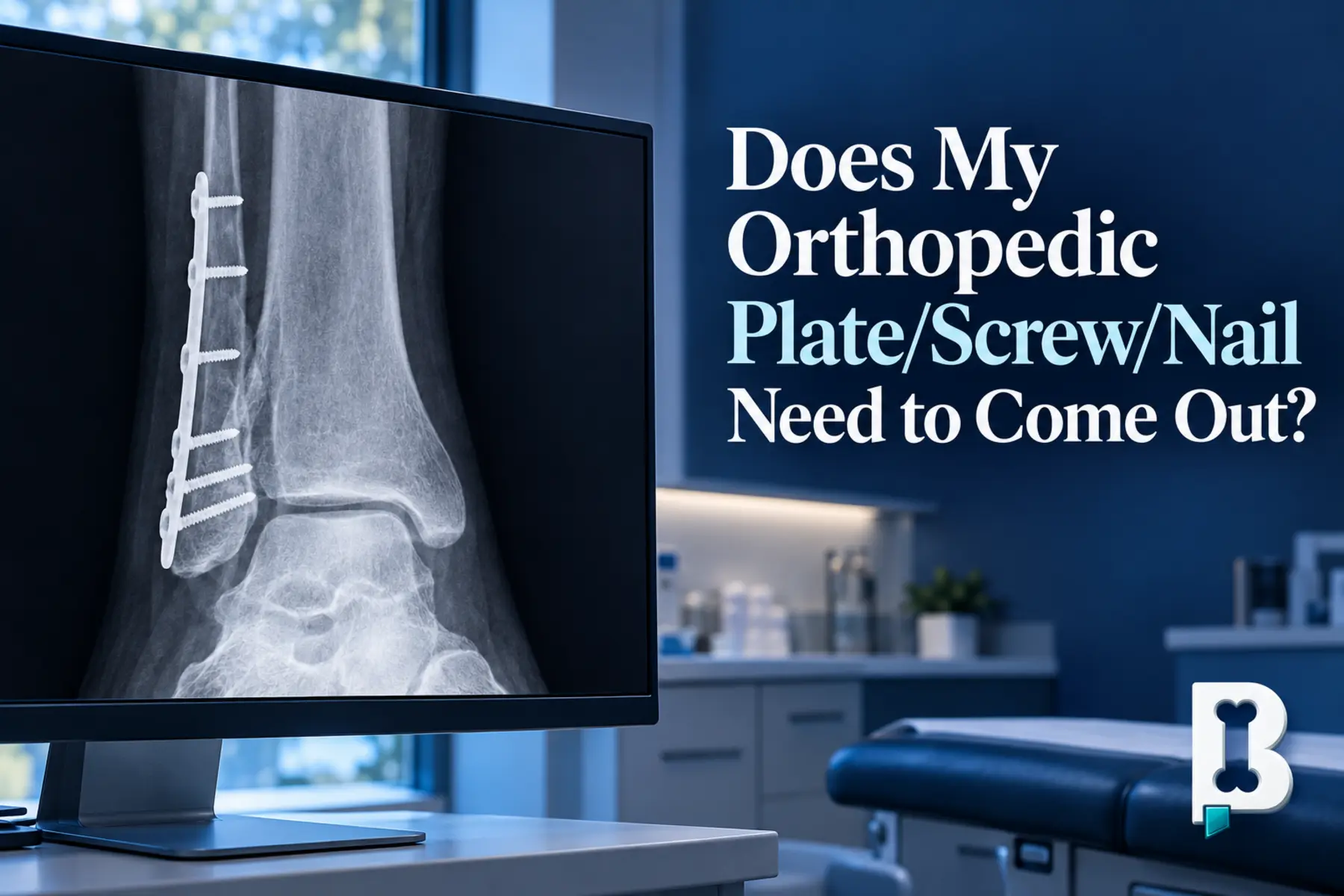
If you had a fracture fixed with a plate, screw, or nail, you may assume the metal has to come out once the bone heals. Usually, it doesn’t. As I tell patients, “If the implant is not bothering you or causing issues, it can stay in.” Modern fixation is generally made to remain in the body.
When leaving it alone makes sense
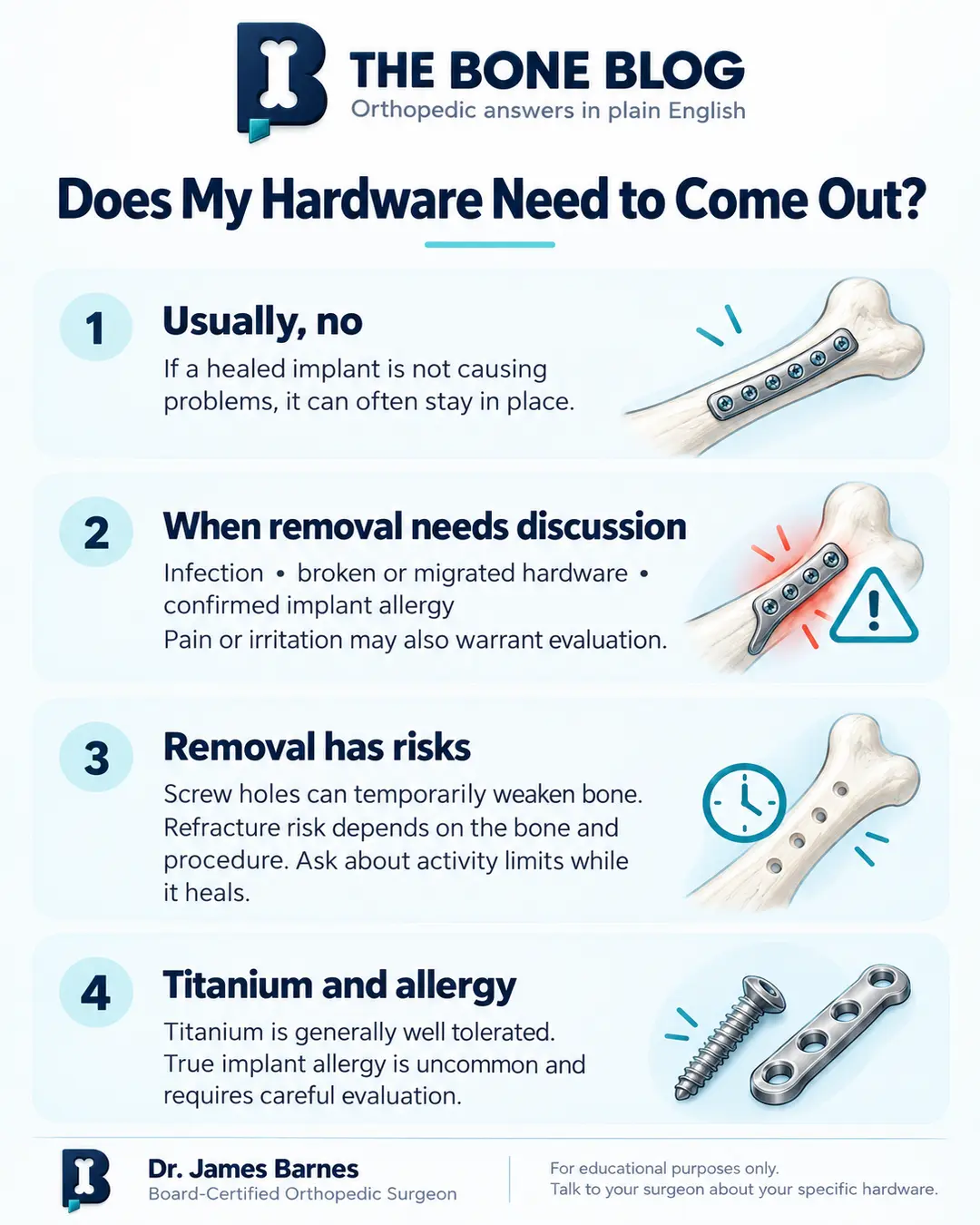
If the fracture is healed and the implant is stable and comfortable, routine removal often offers no medical advantage. The metal has done its job, and taking it out means another incision, anesthesia, and recovery. “The implants will outlive you, and that’s the goal.”
My mother broke both ankles more than 30 years ago and still has her plates and screws. She can feel them, but they don’t meaningfully bother her. Being aware of an implant is different from needing an operation.
When should hardware be evaluated?
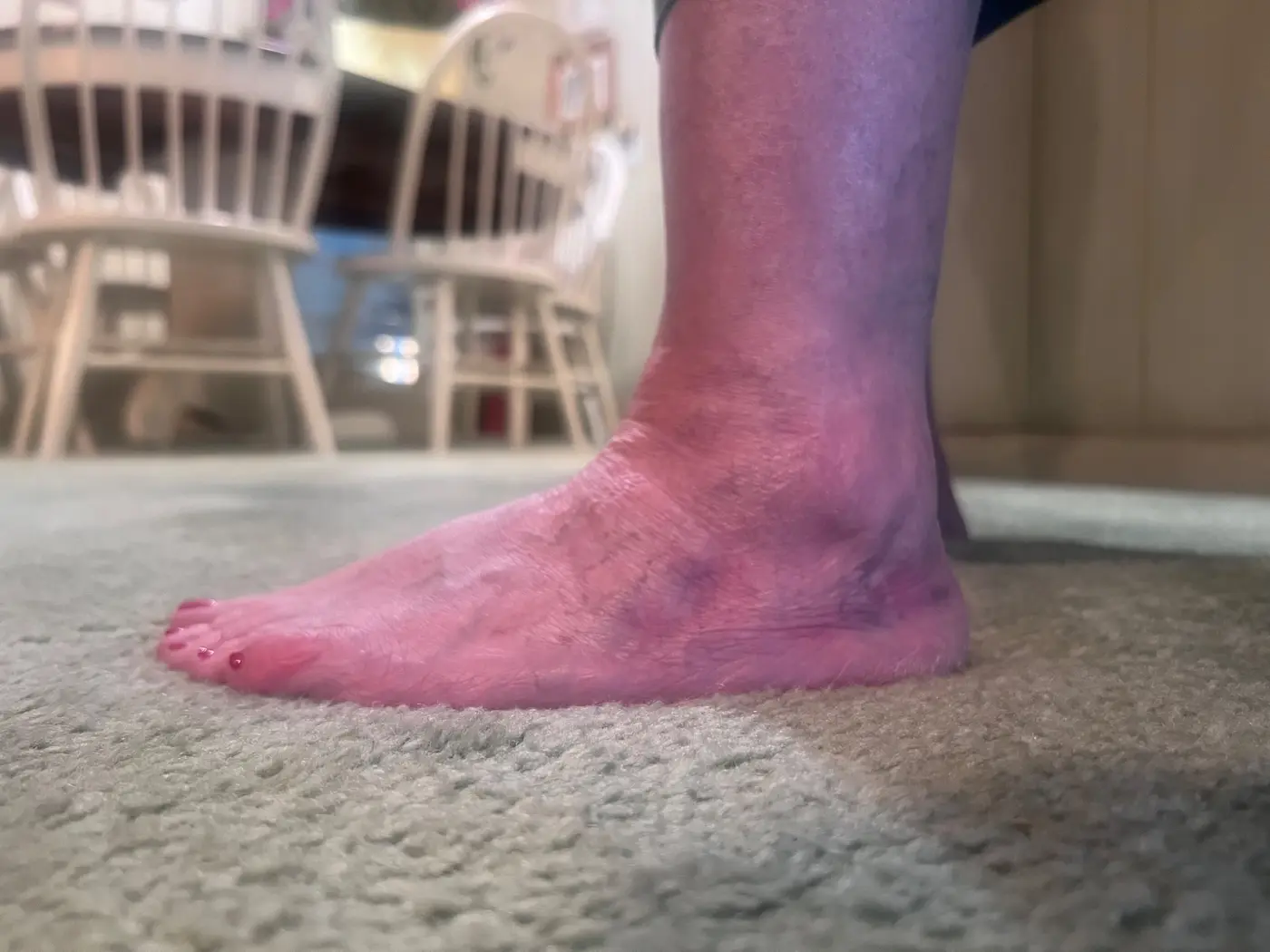
Infection around an implant, broken or shifting hardware, or a fracture that has not united calls for evaluation. The treatment depends on whether the bone has healed and whether fixation is still needed. An infected implant may need removal or exchange as part of a broader plan, but timing is not automatic. New drainage, redness, fever, or increasing pain warrants a call to your surgeon.
Persistent irritation is a more common judgment call. A plate may be prominent under the skin, a screw tip may rub nearby tissue, or motion may be limited. One patient with a healed tibial plateau fracture was bothered by a protruding screw tip for years. Smoothing that tip relieved the problem without removing the entire construct. The right operation, if any, depends on the cause of the symptoms.
Implant allergy is possible but uncommon and difficult to diagnose. A skin reaction to jewelry is not proof that a deep implant is responsible for pain. We first look for infection, mechanical irritation, and other causes. Titanium is generally well tolerated. There is no reliable single percentage that applies to every metal, implant, and patient.
What does removal risk?
Removal is real surgery. Complications can include wound problems, infection, nerve injury, persistent pain, and refracture. In a large American Board of Orthopaedic Surgery case-series analysis, fracture was reported after hardware-removal-only procedures, though risk in any one patient depends on the procedure and site.
Old screw holes can act as temporary weak points. In a forearm plate study, refractures after removal occurred within about three months. That is one reason forearm plates are often left alone if they are not symptomatic. You cannot apply that forearm result directly to an ankle or hip. Ask what the risk is for your bone and what activity limits your surgeon recommends.
If removal is appropriate, I usually confirm union on X-ray first. A CT scan may help when healing is uncertain. For elective removal, I often advise waiting around a year after fixation, but infection or another urgent problem changes that timeline. The details of bone healing and remodeling vary by fracture.
What about airport security and MRI?
Internal plates and screws may or may not trigger screening. Tell security staff you have an implant and follow their process. For MRI, give the imaging team the implant details if you have them. Many modern orthopedic implants can be scanned under specified conditions, but safety and image artifact depend on the exact device and scan protocol. The imaging team should verify compatibility rather than assuming from the word “titanium.”
The bottom line
Hardware that is not causing trouble can usually stay. If it is infected, failing, or genuinely bothering you, there may be a good reason to treat it. First establish that the fracture is healed and what is actually causing the symptoms. Then weigh the likely benefit of removal against the risks for that bone and implant. For broader recovery guidance, see how to support bone healing.
References
- Prediger B, et al. Elective removal vs. retaining hardware in asymptomatic patients: a scoping review. Systematic Reviews. 2020.
- Lawrenz JM, et al. Treatment Approach for Infection of Healed Fractures After Internal Fixation. Journal of Orthopaedic Trauma. 2017.
- Kellam PJ, et al. Complications of Hardware Removal. Journal of Bone and Joint Surgery. 2021.
- Forearm Plate Fixation: Should Plates Be Removed? 2022.
- AO Surgery Reference: Forearm plating and implant removal.
- Roberts TT, et al. Allergic or Hypersensitivity Reactions to Orthopaedic Implants. 2017.
Visual summary
Frequently asked questions
Does every plate or screw need to come out after the bone heals?
No. Hardware that is stable and not causing problems can often remain in place indefinitely. Routine removal adds another operation without a clear benefit for many adults.
When should hardware be checked?
New drainage, redness, fever, increasing pain, a prominent or shifting implant, or a new injury deserves assessment. Infection, implant failure, and incomplete healing need an individualized plan, which does not always mean immediate removal.
Can hardware cause a metal allergy?
A true deep-tissue reaction to an implant is uncommon. Skin sensitivity to jewelry does not prove the implant is causing symptoms. Your surgeon should first evaluate more common causes such as infection or mechanical irritation.
Can a bone break again after hardware removal?
Yes. Screw holes and the original fracture site may temporarily be vulnerable. Risk varies by bone, implant, and procedure. Forearm plate removal is a well-studied example, so ask your surgeon about your own activity restrictions.
How does the surgeon decide when removal is safe?
Dr. Barnes generally confirms solid healing on X-ray and may use CT if union is uncertain. Timing and recovery advice depend on the bone, symptoms, and reason for removal. Infection may require a different approach.
Need a joint checked?
If pain, instability, an injury, or mechanical symptoms are limiting your activity, an orthopedic evaluation can help clarify the cause.
Schedule an Appointment